



The digital entertainment landscape is undergoing a massive transformation. We have moved far beyond the days when playing a game in your browser meant dealing with pixelated graphics, clunky controls, and endless loading screens. Today, a new wave of interactive experiences is capturing the attention of millions worldwide. At the forefront of this revolution are BOB69 games, a diverse and rapidly expanding ecosystem of web and mobile-based titles that are redefining what it means to play on the go. Have the Best information about BOB69.
Whether you are a casual gamer looking for a quick distraction during your lunch break or a dedicated strategist ready to dive into complex mechanics, BOB69 games offer an unprecedented level of polish, accessibility, and depth. They seamlessly blend the convenience of browser gaming with the high-fidelity experiences traditionally reserved for dedicated consoles or heavyweight PC applications.
In this comprehensive guide, we are going to dive deep into everything you need to know about this gaming phenomenon. From understanding the core mechanics and optimizing your technical setup to mastering advanced gameplay strategies and ensuring your online security, this article is your ultimate resource.
The Evolution of Web-Based Entertainment
To truly appreciate the impact of this new gaming era, we must first look at where web-based entertainment started. Early browser games were novelties—simple Flash-based animations that provided a few minutes of amusement. Today, the technology powering web browsers has evolved exponentially. With HTML5, WebGL, and advanced JavaScript frameworks, developers can create stunning 3D environments, complex physics engines, and intricate narrative structures that run directly in your browser.
Bridging the Gap Between Casual and Hardcore
Historically, the gaming industry was split into two rigid categories: hyper-casual games that required no commitment, and hardcore AAA titles that demanded powerful hardware and dozens of hours of your time. This platform bridges that gap perfectly. By offering experiences that are easy to pick up but difficult to master, they have established themselves as some of the best alternatives to casual adventure titles.
Players who once settled for repetitive endless runners or basic match-three games are now discovering titles that offer rich character development, branching storylines, and strategic depth—all without requiring a massive initial download.
Interactive Storytelling at Its Finest
One of the most remarkable advancements in this ecosystem is the implementation of narrative. Gone are the days when browser games were entirely devoid of plot. Today, interactive storytelling in digital games is a massive draw for the community. Developers are utilizing text-based choices, fully voice-acted cutscenes, and environmental storytelling to draw players into immersive worlds.
When you play these titles, your choices matter. Decisions made in the early stages of a campaign can ripple outward, affecting alliances, altering character alignments, and ultimately leading to entirely different endings. This level of narrative consequence encourages multiple playthroughs and fosters a highly engaged player base that actively discusses lore and theories online.
Core Gameplay Mechanics: A Deep Dive
Understanding how these games function under the hood is crucial for anyone looking to maximize their enjoyment and performance. The architecture of these titles is built around flexibility, ensuring that players of all skill levels can find their footing.
Free Play Mode Mechanics Explained
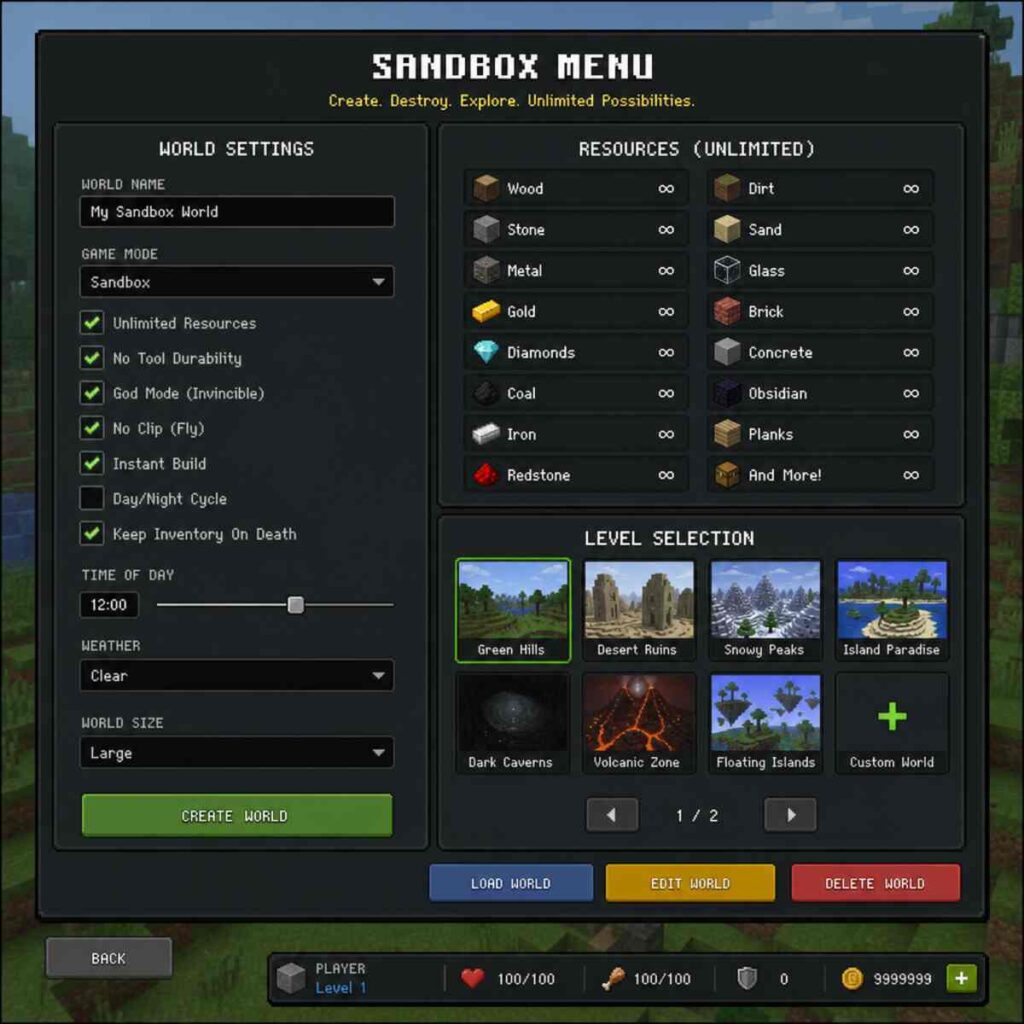
Before diving into competitive ladders or intense story campaigns, many players prefer to test the waters. This is where the platform’s sandbox environments shine. Having the free play mode mechanics explained is usually the first step for any new player looking to improve their skills without the stress of failure.
In Free Play Mode, players are typically granted:
- Unlimited Resources: Health, stamina, and in-game currency are capped at maximum levels, allowing you to experiment with different character builds and item combinations.
- Disabled Timers: In puzzle or strategy scenarios, the clock is turned off. This gives you the freedom to analyze the board, understand enemy AI patterns, and plan complex maneuvers at your own pace.
- Level Selection: You can jump directly to specific stages or boss fights to practice mechanics that you find challenging in the main campaign.
Utilizing Free Play Mode is highly recommended. It serves as a zero-risk laboratory where you can refine your reflexes and formulate strategies before applying them in ranked or story modes.
The Role of Mini-Games and Side Quests
No modern adventure is complete without a healthy dose of side content. Within the broader campaigns, you will frequently encounter smaller, self-contained challenges. These range from rhythm-based hacking sequences to intricate lock-picking puzzles.
One of the most exciting aspects of these diversions is unlocking hidden rewards in mini-games. Developers often hide some of the best loot—such as rare cosmetic skins, powerful early-game weapons, or exclusive lore documents—behind these optional challenges.
- Observation is Key: Pay attention to the background environment. Sometimes, the solution to a mini-game is hidden in a poster on the wall or the pattern of a blinking light.
- Perfect Timing: Many mini-games rely on precise input. Learning the audio and visual cues will help you achieve the “Perfect” rating required for top-tier rewards.
- Replayability: If you fail a mini-game, check if you can replay it. Often, returning to an area later with upgraded skills will make previously impossible mini-games a breeze.
Strategy Guide: From Beginner to Expert
Whether you are struggling with a tricky boss fight or trying to climb the global leaderboards, having a solid strategy is essential. The following sections will take you from your very first login to executing advanced, high-level tactics.
Getting Started: The Foundation
For those completely new to the platform, jumping into a deeply layered game can feel overwhelming. To ease the transition, we have put together a reliable beginner walkthrough for stage progression.
- Prioritize the Tutorial: Do not skip the opening tutorial. Even if you are a veteran gamer, the unique control schemes and resource management systems require adjustment. The tutorial stages often reward you with essential starter items.
- Focus on Core Upgrades First: As you progress through the early stages, you will earn skill points or currency. Resist the urge to buy cosmetic items or highly specialized skills. Instead, invest in core stats: health, stamina, and basic attack power.
- Explore Every Corner: Stage progression is rarely a straight line. Take the time to explore branching paths. You will often find checkpoints, healing items, and shortcuts that will make navigating the stage much easier.
- Manage Your Inventory: Do not hoard low-level items. Use them to survive the early stages. By the time you reach the mid-game, you will be finding vastly superior equipment anyway.
- Learn Enemy Patterns: Every enemy has a “tell”—a specific animation or sound effect that plays right before they attack. Learning these tells in the early stages will prepare you for the chaotic battles later on.
Conquering the Impossible: Advanced Tactics
Eventually, every player hits a wall. You will encounter a stage or a boss that seems completely insurmountable. When you find yourself stuck, knowing how to win difficult levels comes down to analytical thinking and patience.
- Analyze Your Failures: When you die or fail a level, ask yourself why. Did you run out of time? Did you take too much damage from a specific attack? Identifying the cause of failure is the first step to correcting it.
- Change Your Loadout: If a level is heavily armored, using fast, low-damage attacks won’t work. Switch to weapons or abilities that offer armor penetration, even if they are slower. Adaptability is your greatest weapon.
- Use the Environment: Difficult levels are often designed with environmental hazards. Lure enemies into traps, use explosive barrels to deal massive area-of-effect damage, or use chokepoints to fight enemies one at a time.
- Take a Break: It sounds simple, but tilt (playing while frustrated) drastically reduces your reaction time and decision-making skills. Step away for ten minutes, let your brain process the patterns, and try again.
The Art of the Shadows
Many of the top-rated titles on this platform incorporate elements of espionage and subterfuge. If you prefer to outsmart your enemies rather than overpower them, mastering strategic stealth mechanics is an absolute necessity.
Stealth in these games goes far beyond simply crouching behind a box. It is a dynamic system of light, sound, and line-of-sight.
- Manipulate the Lighting: Shoot out lights or use EMP devices to create areas of darkness. Enemies cannot target what they cannot see.
- Sound Discipline: Running creates noise; crouching is silent. Pay attention to the surface you are walking on—metal grates and broken glass will alert guards much faster than carpet or dirt.
- Distractions: Throw objects like rocks or empty magazines to direct a guard’s attention away from the path you need to take.
- The Vertical Advantage: Enemies rarely look up. Utilize grappling hooks, ledges, and rafters to bypass heavily guarded checkpoints entirely.
- Patience is Mandatory: Stealth is not a race. Take the time to observe guard patrol routes. Every patrol has a gap or a moment of vulnerability—wait for it, execute your move, and fade back into the shadows.
Chasing the High Score
If narrative campaigns aren’t your primary focus, you are likely drawn to the competitive, fast-paced nature of arcade modes. Here, survival is secondary to accumulating points. If you want to see your name at the top of the global leaderboards, you need specific tips for high scores in arcade mode.
- Maintain the Combo Meter: The key to exponential point growth is the combo meter. Never let it drop. If there are no enemies around, perform a dodge-roll, break an environmental object, or use a taunt mechanic to keep the combo timer alive until the next wave spawns.
- Risk vs. Reward: Arcade modes often reward you for playing dangerously. Defeating an enemy at the last possible second before they strike you, or clearing a wave with low health, will often yield massive point multipliers.
- Speed is Points: Time is always a factor. Memorize enemy spawn locations so you can drop an area-of-effect attack exactly where they will appear, instantly clearing the wave and maximizing your time bonus.
- Resource Hoarding for Bosses: Save your ultimate abilities and screen-clearing items for the end-of-stage bosses. Defeating a boss in record time offers the largest single point injection in arcade mode.
The Technical Ecosystem: Hardware, Software, and Performance
Even the greatest game in the world is unplayable if the technical performance is poor. Because these games bridge the gap between browser and mobile platforms, understanding the technical nuances will dramatically improve your experience.
Browser vs. Native Application
One of the most frequently asked questions in the community involves comparing web versus app performance. Which is the superior way to play? The answer depends entirely on your hardware and your gaming habits.
Web Browser Performance:
- Pros: Instant access. No massive files to download, no storage space taken up on your device. Cross-platform compatibility means you can start a game on your Mac and seamlessly continue it on your Windows desktop at work.
- Cons: Highly dependent on internet speed and browser efficiency. Can be subject to lag if the browser is running multiple heavy extensions in the background.
Dedicated App Performance:
- Pros: Superior resource allocation. An app can utilize your device’s GPU and CPU more directly, resulting in higher framerates, better battery optimization on mobile, and the ability to download high-resolution assets for offline play.
- Cons: Requires storage space, manual updates, and ties you to a specific operating system ecosystem (iOS or Android).
Ultimately, developers are striving for parity. The goal is to ensure that a player in Chrome has the exact same visual and mechanical experience as a player using the native iOS application.
Troubleshooting the Browser Experience
If you choose to play on a desktop, you might occasionally run into performance hiccups. Because web browsers are designed to do many things at once, they aren’t always perfectly optimized for intense gaming sessions right out of the box. Knowing the steps for fixing lag in web browser platforms will save you a lot of frustration.
- Enable Hardware Acceleration: This is the most critical step. Go into your browser settings (Chrome, Edge, Firefox) and ensure that “Use hardware acceleration when available” is turned on. This offloads the heavy graphical lifting from your CPU to your dedicated graphics card.
- Clear the Cache: Over time, corrupted temporary files can cause severe stuttering. Regularly clear your browser cache and cookies, specifically for the gaming sites you frequent.
- Disable Heavy Extensions: Ad-blockers, VPN extensions, and memory-heavy add-ons (like grammar checkers) continuously scan the webpage you are on. This constant scanning can cause massive frame drops during gameplay. Use an “Incognito” or “Private” window with extensions disabled for gaming.
- Update Your Browser and Drivers: Ensure your browser is up to date, as updates often include improvements to WebGL and JavaScript engines. Similarly, keep your computer’s graphics drivers updated.
- Check Your Network: Browser games constantly stream data. If you are experiencing “rubber-banding” (where your character snaps back to a previous position), the issue is likely a high ping or packet loss. Switch from Wi-Fi to a wired Ethernet connection if possible.
The Mobile Experience
For those playing on smartphones and tablets, the interface is everything. The lack of tactile buttons means developers have to get creative. Modern mobile gaming interface features have evolved to be highly customizable and intuitive.
- Dynamic UI Scaling: The best games automatically adjust the size and spacing of on-screen buttons based on your device’s screen size and resolution, preventing accidental inputs.
- Customizable HUDs: Players should be able to drag, drop, resize, and change the opacity of every button on the screen. If you play with a “claw” grip, you need a different layout than someone playing with just their thumbs.
- Haptic Feedback Integration: Advanced mobile titles use the phone’s vibration motor to provide physical feedback. You will feel a light tap when you successfully parry an attack, and a heavy rumble when an explosion goes off nearby, mimicking the feel of a traditional console controller.
- Gyroscope Aiming: For precision tasks, many games allow you to physically tilt your phone to fine-tune your crosshairs, providing a level of accuracy that on-screen thumbsticks simply cannot match.
Community, Connectivity, and Security
Gaming is no longer a solitary activity. The social aspects of modern platforms are just as important as the gameplay itself. However, with increased connectivity comes the need for heightened vigilance regarding privacy and safety.
Building a Community
The implementation of multiplayer social gaming integration has turned these platforms from simple websites into thriving digital communities. It is no longer just about beating a game; it is about experiencing it alongside others.
- Guilds and Clans: Players can band together to form persistent groups. These guilds often feature private chat rooms, shared resource pools, and collective goals.
- Asynchronous Multiplayer: Even if you aren’t playing at the same time as your friends, you can still interact. You might leave helpful messages on the ground (a la Dark Souls), send resources, or compete against a “ghost” recording of your friend’s best speedrun.
- Live Events: Developers frequently host time-limited global events where the entire community must work together to achieve a massive goal, such as defeating a global boss with billions of hit points. Participation rewards everyone with exclusive loot.
Staying Safe in the Digital World
Whenever you interact with an online platform that features chat rooms, accounts, and potentially microtransactions, security must be a priority. Ensuring platform safety for online players is a shared responsibility between the developers and the users.
As a player, you must practice good digital hygiene:
- Use Strong, Unique Passwords: Never use the same password for your gaming account that you use for your email or banking.
- Enable Two-Factor Authentication (2FA): If the platform offers 2FA via an SMS code or an authenticator app, turn it on immediately. It is the single most effective way to prevent account theft.
- Beware of Phishing: Moderators and developers will never ask for your password. If a user in the global chat offers “free in-game currency” in exchange for your login details, report and block them instantly.
- Manage Privacy Settings: Limit who can send you direct messages or friend requests to prevent harassment or spam.
How Developers Protect You
On the backend, reputable platforms invest heavily in browser-based gaming security protocols. While you may not see them, these systems are constantly working to keep your data safe and the playing field level.
- SSL Encryption: Secure Socket Layer encryption ensures that all data transferred between your browser and the game’s servers (including login credentials and payment info) is scrambled and unreadable to interceptors. Look for the padlock icon in your browser’s address bar.
- Anti-Cheat Systems: To maintain the integrity of leaderboards and multiplayer matches, platforms utilize sophisticated algorithms that monitor for memory injection, macro scripts, and speed hacks. Players caught using unauthorized software are swiftly banned.
- Tokenized Authentication: When you log in, modern games use token-based systems (like OAuth). This means your actual password isn’t constantly being sent back and forth during gameplay, drastically reducing the risk of interception.
- DDoS Protection: Distributed Denial of Service attacks can cripple a game’s servers. Premium platforms utilize cloud-based mitigation services to absorb and deflect malicious traffic, ensuring the servers stay online even under attack.
Expanding Your Horizons: Beyond the Basics
Once you have mastered the core mechanics, optimized your browser, and established a secure account, you might start looking for new challenges. The beauty of this ecosystem is its vast variety.
Exercising the Mind
If you want to take a break from high-octane action or intense stealth, the platform is also home to some of the most mentally stimulating titles available today. The rise of popular online puzzle challenges provides a perfect palette cleanser.
These aren’t your grandmother’s crossword puzzles. Modern digital puzzles incorporate physics, spatial reasoning, and logic gates. You might find yourself redirecting beams of light through a maze of prisms, programming a virtual robot to navigate an obstacle course, or manipulating gravity to guide a sphere to its destination.
These puzzle challenges are incredibly beneficial. They improve cognitive function, enhance problem-solving skills, and train your brain to think outside the box—skills that directly translate back to improving your performance in the more action-oriented titles.
The Future of the Platform
So, what comes next? As internet speeds continue to increase globally and browser technologies become even more sophisticated, the line between “browser game” and “AAA blockbuster” will blur entirely.
We are already seeing the integration of cloud gaming technologies, where the heavy processing is done on remote supercomputers and only the video feed is streamed to your browser. This will allow laptops and mobile devices to run games with photorealistic ray-traced graphics and massive, persistent multiplayer worlds.
Furthermore, we can expect to see deeper integration of AI. Imagine interactive storytelling where the dialogue isn’t pre-written, but generated dynamically by an AI based on your specific actions and personality, creating a truly one-of-a-kind narrative for every single player.
Conclusion: Ready to Play?
The world of BOB69 games is a testament to how far digital entertainment has come. It is an ecosystem that respects the player’s time, offering the flexibility to play for five minutes or five hours, on a high-end desktop or a budget smartphone.
From the deeply engaging interactive storytelling in digital games to the pulse-pounding intensity of chasing high scores, there is truly something here for everyone. By taking the time to understand the mechanics, utilizing strategic guides to overcome difficult levels, and optimizing your hardware for peak performance, you can unlock the full potential of these incredible platforms.
The digital frontier is vast, exciting, and constantly evolving. The servers are live, the communities are waiting, and the next great adventure is just a click away. Equip your gear, formulate your strategy, and dive in. The game is on.